Bring the panel
to the patient.
Unparalleled access to comprehensive testing in the clinic, the hospital and the home.
For research use only.

The Problem
Chronic disease costs $4 Trillion a year.

LIVER DISEASE
US adults are estimated to have chronic liver disease. Only 4.5M have been diagnosed (CDC estimate).

KIDNEY DISEASE
U.S. adults are estimated to have chronic kidney disease; CDC reports that most are undiagnosed.

CARDIOVASCULAR DISEASE
in the US are attributed to cardiovascular disease, according to CDC. It is the leading cause of death.

METABOLIC DISEASE
In the United States have obesity, a chronic disease linked to heart disease and type 2 diabetes.
The solution
Detect disease sooner and monitor the progression more often.
Early intervention is key. By identifying risks before severe symptoms develop, healthcare systems and individuals avoid the astronomical expenses associated with emergency room visits, advanced surgeries, and long-term disability.
the how
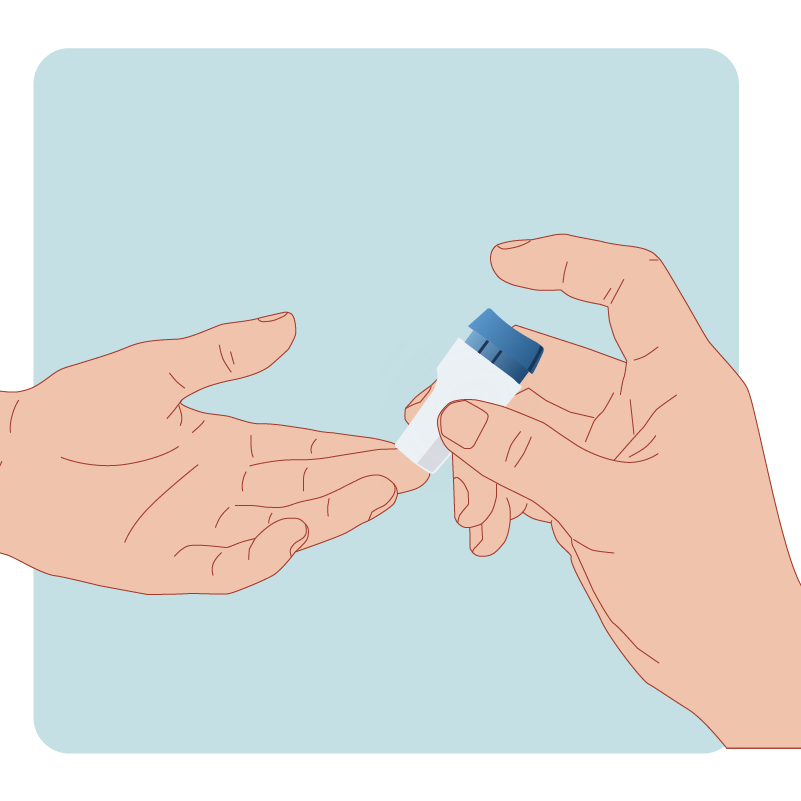
A digital blood test that operates from a finger-stick.


The Data
Move disposables and data, not patients and samples.
LIVER DISEASE
4 analytes • hepatic function & injury
WHAT IT INDICATES
AST
20-1000
Aspartate aminotransferase — an enzyme released into blood when liver or muscle cells are damaged.
ALT
20-1000
Alanine aminotransferase — more liver-specific than AST; a core marker for hepatocellular injury.
ALP
50-1500
Alkaline phosphatase — elevated with bile duct obstruction or bone turnover.
TBIL
1-12
Total bilirubin — a marker of red cell breakdown and liver clearance capacity.
KIDNEY DISEASE
5 analytes • renal function & injury
WHAT IT INDICATES
BUN
10-120
mg/dL
Blood urea nitrogen — a byproduct of protein metabolism cleared by the kidneys.
CRE
1-12
mg/dL
Creatinine — the standard marker used to estimate glomerular filtration rate.
Cys C*
0.6-10
mg/L
Cystatin C — an earlier, muscle-mass-independent marker of declining kidney function.
15–120
Calculated from CRE and Cys C for superior estimation of glomerular filtration rate.
K⁺*
2-8
mmol/L
Potassium — critical for cardiac and renal patients where small shifts carry real risk.
CARDIOVASCULAR DISEASE
5 analytes • cardiac risk
WHAT IT INDICATES
CHOL*
20-520
mg/dL
Total cholesterol — a baseline input into overall cardiovascular risk.
HDL*
15-100
mg/dL
High-density lipoprotein — the protective cholesterol fraction.
TRIG*
20-500
mg/dL
Triglycerides — a metabolic and cardiovascular risk marker sensitive to diet and glycemic control.
NT-proBNP*
100-3000
ng/L
A marker of ventricular wall stress, used to assess and monitor heart failure.
hs-CRP*
0.5-10
mg/L
High-sensitivity C-reactive protein — a marker of vascular inflammation and cardiac risk.
METABOLIC DISEASE
3 analytes • glycemic control
WHAT IT INDICATES
GLU
20-500
mg/dL
Glucose — the point-in-time measure of blood sugar.
C-peptide*
0.5-10
ng/mL
A byproduct of insulin production, and a marker of insulin resistance.
0.5 -5.0
Calculated from GLU and C-peptide to estimate insulin resistance.
HbA1C*
4-13
%
Glycated hemoglobin — average blood glucose over the preceding ~3 months.
* Expected in 2030 with the launch of the 128-bit 16-plex implementation.
The model
Better information leads to better outcomes.
A deterministic machine-learning algorithm that relies on individual baselines and Relative Change Values (RCVs) can recommend a re-test for additional statistical powering, a tele-consult for oversight, or immediate action in case of emergency.

Mission Statement
Our mission is to access exponentially more information from a drop of blood,
by miniaturizing and combining blood tests onto a microchip.
The team
Pioneers of microchip blood testing.

CEO
Octavian Florescu, PhD
More than 20 years developing microchip-based point-of-care devices. PhD in Electrical Engineering from UC Berkeley, with a minor in Molecular and Cell Biology; BSc in Computer Engineering from the University of Waterloo.

COO
Ana Florescu
Leads operations and business development at In Diagnostics, drawing on a background in finance and entrepreneurship and experience developing programs for international entrepreneurs in the Bay Area.

Advisor
Clint Severson
CEO of Abaxis, which he led from 1995 with sales of less than $6M through its acquisition by Zoetis in 2018 for $2B, representing the last major exit for a point-of-care blood testing platform.

Advisor
Frank Peacock, MD, Emergency Physician
Serves as faculty and professor of Emergency Medicine at Baylor College of Medicine and CEO of Comprehensive Research Associates. He completed his training at William Beaumont Hospital and is a serial enterpreneur.

Advisor
Alan Wu, PhD
Chief of clinical chemistry and toxicology at San Francisco General Hospital, as well as professor of laboratory medicine at the University of California, San Francisco (USCF), where he serves as medical director of the clinical pharmacogenomics laboratory.

Advisor
Kenneth Aron, PhD
Chief Technology Officer at Abaxis, Inc. from 2000 to 2018 where he developed the platform from a sparse set of indications to a wide menu of comprehensive, FDA-approved, CLIA-waived panels.
The Partners

